
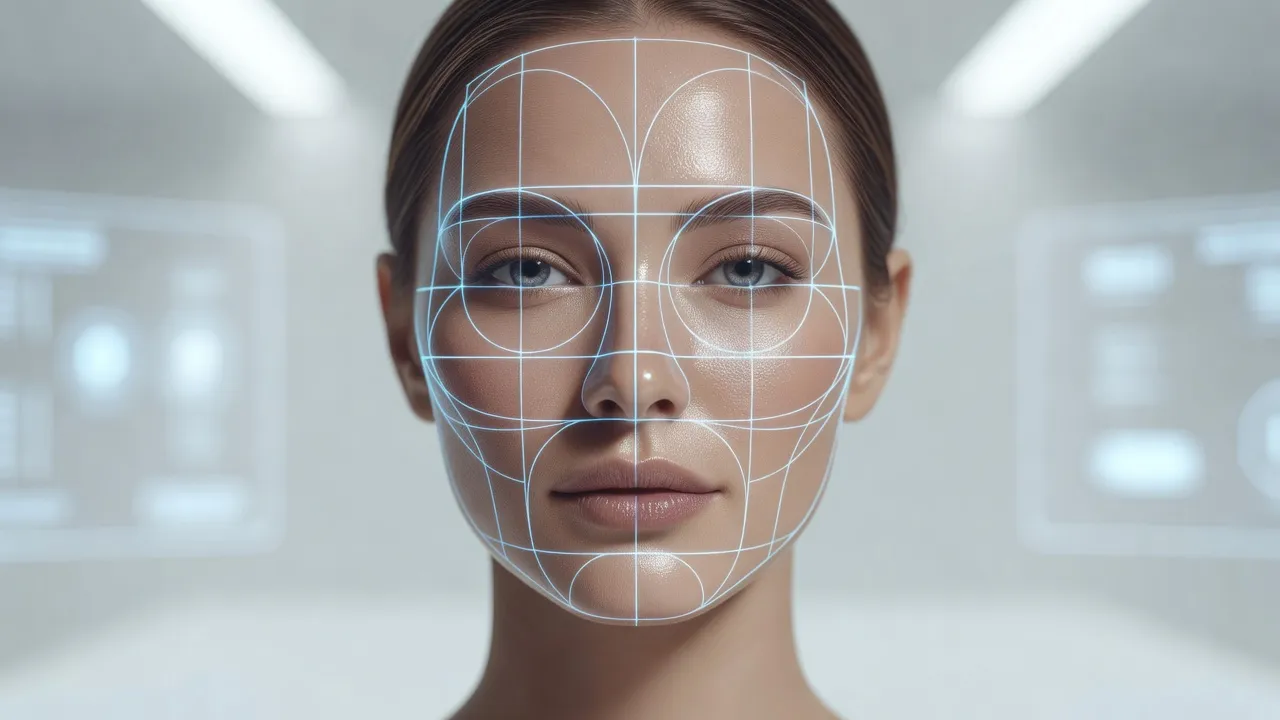
A beauty rating is a quantitative assessment of facial attractiveness measured through scientific scales, crowdsourced human feedback, or artificial intelligence algorithms. While early digital rating systems relied on simple peer voting, modern platforms evaluate complex geometric facial proportions, facial symmetry, skin quality, and harmony. Understanding how these scores are calculated helps you differentiate between objective scientific metrics and subjective public opinion.
People often make the mistake of trusting a single, arbitrary number without understanding how lighting, camera focal length, and algorithmic bias heavily skew the output. Relying on an uncalibrated score can distort your self-perception or lead to unnecessary grooming interventions based on flawed data.
If you want an accessible way to evaluate your aesthetics, apps like the Glow Up & Attractiveness Test use fine-tuned AI models to analyze selfies and provide immediate, practical aesthetic feedback.
What attractiveness rating scales (Likert, visual analogue scale, FACES scale) are used in research?
Academic researchers evaluate attractiveness using standardized psychological tools including Likert scales, Visual Analogue Scales (VAS), and the FACES rating system. Plastic surgeons, evolutionary biologists, and psychologists rely on these structured scales to eliminate human bias during clinical trials and observational studies.
The Likert Scale in aesthetic research
The Likert scale measures perceived attractiveness on a discrete numerical continuum, typically ranging from 1 (unattractive) to 7 or 10 (highly attractive). Researchers present standardized photos to panels of evaluators who assign an integer score to each subject. This method produces easy statistical averages, but it often compresses subtle visual differences into identical mid-range scores.
Visual Analogue Scale (VAS)
The Visual Analogue Scale allows evaluators to mark attractiveness on a continuous 100-millimeter line anchor between two polar extremes. A researcher then measures the distance in millimeters from the left anchor to determine a precise score. According to research published on PubMed, continuous scales like the VAS offer higher sensitivity than Likert scales when tracking subtle facial aesthetic changes before and after cosmetic surgery.
The FACES rating scale
The FACES scale uses explicit visual references and standardized pictorial anchors rather than raw numbers to evaluate aesthetic harmony. Originally developed for clinical pain assessment, modified FACES frameworks help dermatologists and surgeons categorize soft tissue volume loss and facial symmetry. Using visual benchmarks ensures that different researchers score identical facial features with high inter-rater reliability.
What was the Beauty.AI controversy over bias and accuracy?
The 2016 Beauty.AI contest was the first international beauty pageant judged entirely by artificial intelligence, which caused widespread controversy when its algorithms selected almost exclusively white winners. Out of nearly 6,000 photo submissions from over 100 countries, the deep-learning models judged only one dark-skinned contestant among the 44 top finalists.
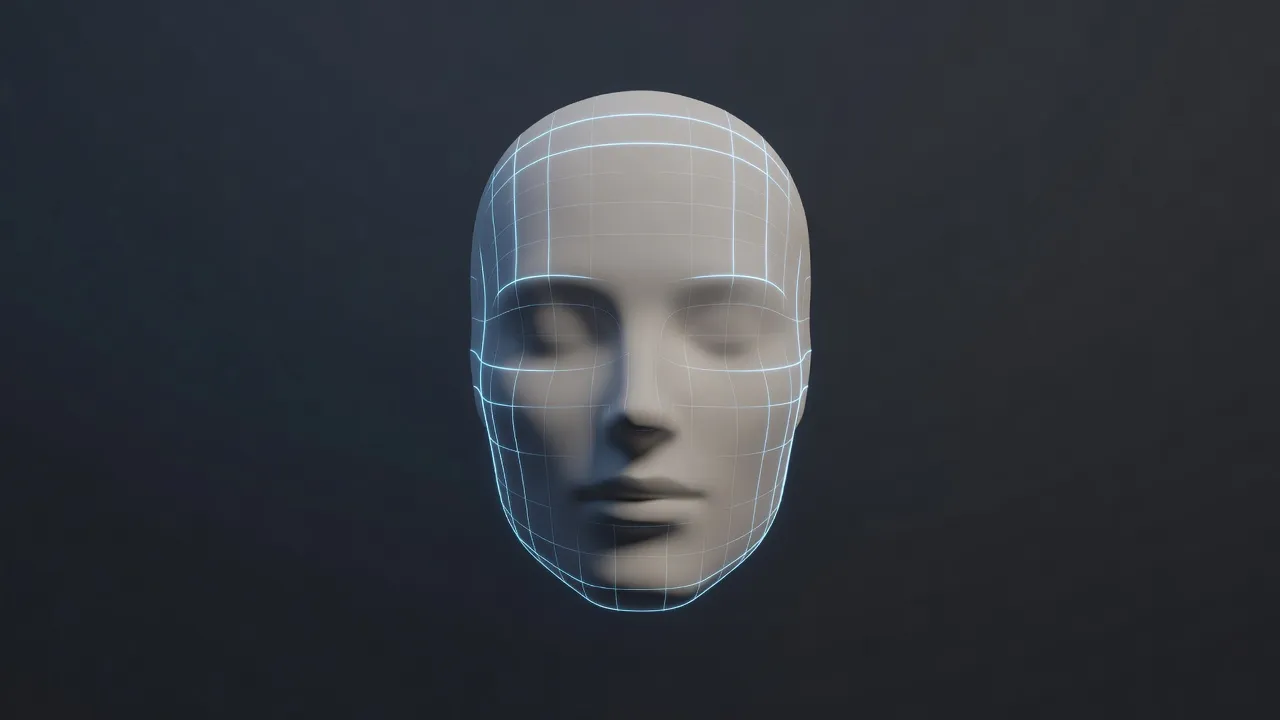
The contest used several distinct algorithms to assess facial wrinkles, symmetry, gender-specific traits, and perceived age against large training datasets. As detailed in contemporary coverage by The Guardian, the bias occurred because the training dataset lacked sufficient diversity, causing the neural networks to treat darker skin tones and non-European features as aesthetic anomalies.
This landmark controversy demonstrated two major lessons that still apply to AI beauty ratings in September 2026:
- Dataset quality dictates fairness: An algorithm cannot evaluate human beauty objectively if its training data overrepresents a single demographic.
- Lighting impacts skin analysis: Early computer vision models frequently misclassified darker complexions due to poor contrast handling in standard photographic inputs.
- Symmetry isn't everything: Early automated raters over-indexed on rigid facial proportions while failing to account for regional cultural beauty standards.
What is the Hot or Not app, its history and popularity?
Launched in October 2000, Hot or Not was an iconic early website where users submitted photos for public visitors to rate on a scale from 1 to 10. Created by Silicon Valley engineers James Hong and Jim Young, the site transformed internet culture by turning user-generated photo rating into an instant viral phenomenon.
According to historical archives documented on Wikipedia, Hot or Not reached millions of daily page views within months of launching. The platform heavily influenced the foundational design of early social networks, directly inspiring Mark Zuckerberg's Harvard predecessor "Facemash" and the swiping mechanisms later popularized by modern dating applications.
While Hot or Not proved the massive public demand for crowdsourced physical feedback, its raw voting system suffered from severe statistical flaws:
- Self-selection bias: Users who posted photos were rarely representative of the average population.
- Demographic skew: Votes reflected the uncalibrated preferences of anonymous web traffic rather than controlled demographics.
- Lack of constructive advice: The site provided a harsh numerical score without explaining why a photo received that rating or how to improve it.
What are the most popular and trusted beauty rating apps?
The most popular beauty rating apps combine artificial intelligence computer vision, golden ratio geometry, and panel-based feedback to grade facial photos. Modern users can choose between instant computer vision scoring, geometric proportion calculation, or human panel voting depending on their specific goals.
Choosing the wrong app often leads to frustration. Many basic mobile utilities rely on fixed randomizers or simple lighting detectors, confusing photographic quality with actual facial harmony.
| Platform / Method | Primary Approach | Cost | Best Suited For |
|---|---|---|---|
| Photofeeler | Crowdsourced human voting panels | Free tier / Paid credits | Testing business, social, and dating profile pictures |
| Glow Up & Attractiveness Test | Fine-tuned AI model & facial analysis | $9.99/week | Women seeking a personalized face rating score and targeted glow-up advice |
| PhiMatrix | Digital Golden Ratio grid overlay | One-time purchase ($29) | Measuring precise geometric proportions and facial symmetry |
| Golden Ratio Face App | Algorithmic facial landmark analysis | Free with in-app purchases | Quick aesthetic landmark calculations on standard selfies |
For women interested in mobile-first analysis, the Glow Up & Attractiveness Test iOS App provides a streamlined experience. You simply snap a selfie to receive an instant analysis based on trained aesthetic models, paired with practical suggestions to refine your hair, skin, and makeup choices.
What is Photofeeler and what is its reputation?
Photofeeler is a dedicated photo-testing platform that gathers anonymous human feedback on user photos across three distinct categories: Smart, Trustworthy, and Attractive. Founded in 2012, the platform maintains a strong industry reputation by using statistical controls, voting karma systems, and anti-bot measures to deliver reliable real-world data.
Unlike AI tools that measure geometry, Photofeeler tests real human perception in specific social contexts. A photo might receive a low attractiveness score for a corporate LinkedIn profile, yet score highly when tested for a casual dating environment.
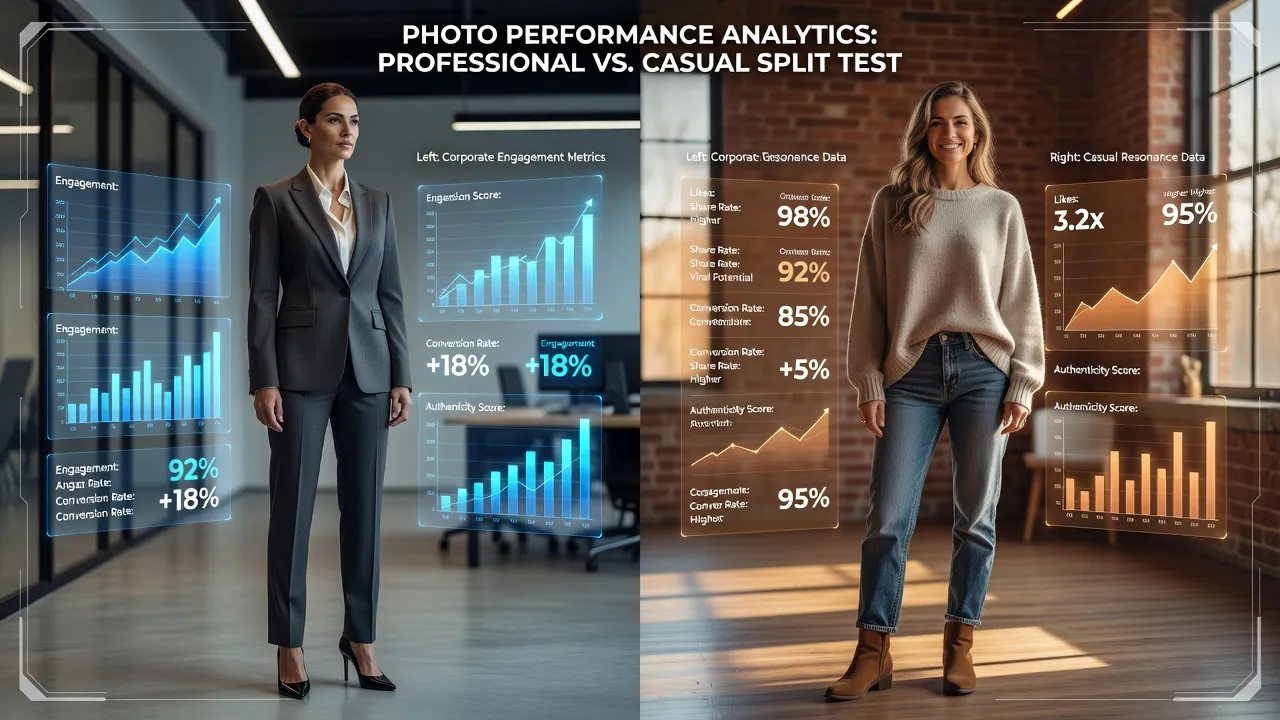
Understanding why your scores fluctuate on human rating platforms comes down to several environmental variables:
- Camera angle and distance: Focal lengths under 50mm distort facial features by exaggerating the nose and narrowing the jaw.
- Micro-expressions: Genuine eye crinkles (Duchenne smiles) significantly boost perceived trustworthiness and attractiveness compared to neutral expressions.
- Lighting direction: Direct overhead lighting casts harsh shadows under the eyes, which lowers perceived facial harmony.
Understanding that beauty is subjective across different demographics helps put crowdsourced human feedback into perspective.
What is the Golden Ratio face app (PhiMatrix) for beauty rating?
PhiMatrix is a specialized golden ratio design and analysis software that overlays dynamic Phi proportions (1:1.618) onto digital portrait photographs. Developed by Gary Meisner, the software allows users and medical professionals to visually audit how closely facial features align with golden ratio proportions.
Golden ratio beauty rating apps place computerized gridlines over key facial landmarks to calculate strict mathematical ratios:
- Interpupillary distance relative to jaw width: Measuring the space between eye centers against total facial width.
- Nose length to lip position: Calculating the vertical spacing between the base of the nose, mouth center, and chin tip.
- Facial height-to-width ratio: Comparing overall vertical length against horizontal cheekbone width.
While golden ratio apps provide clear mathematical measurements, researchers emphasize that perfect golden ratio alignment is not a prerequisite for human attractiveness. Many attractive individuals possess distinct asymmetrical features or unique proportions that fall outside rigid mathematical templates.
How modern AI face ratings analyze facial metrics
Modern artificial intelligence rating systems move far beyond simple golden ratio grids by mapping hundreds of dynamic facial landmarks in three-dimensional space. Rather than relying on a single mathematical formula, neural networks compare your facial geometry against vast datasets of rated images to identify subtle aesthetic patterns.
Understanding how computer vision models break down your face helps demystify the output score:
Facial landmark detection
Algorithms identify precise spatial points along your jawline, eye corners, nose bridge, and lip contours. The system calculates absolute distance vectors and structural ratios, evaluating parameters like the face width height ratio without getting distracted by background elements.
Skin texture and tone analysis
Advanced models separate underlying structural features from surface-level skin characteristics. The AI evaluates color uniformity, texture smoothness, and contrast markers to detect issues like dullness or uneven tone. Using targeted skincare guidance, such as a dedicated morning skincare routine, directly improves the surface clarity metrics these algorithms measure.
Symmetry scoring
Computer vision software mirrors facial halves down the central axis to measure micro-asymmetries. While slight asymmetry is completely normal in human faces, higher degrees of structural balance correlate strongly with higher automated attractiveness scores.
Why beauty ratings vary across algorithms and social contexts
A major flaw in relying on beauty ratings is assuming that a single score represents universal truth. A score generated by a neural network trained on East Asian aesthetic preferences will differ dramatically from one trained on Western European fashion models or crowdsourced dating profile reviews.
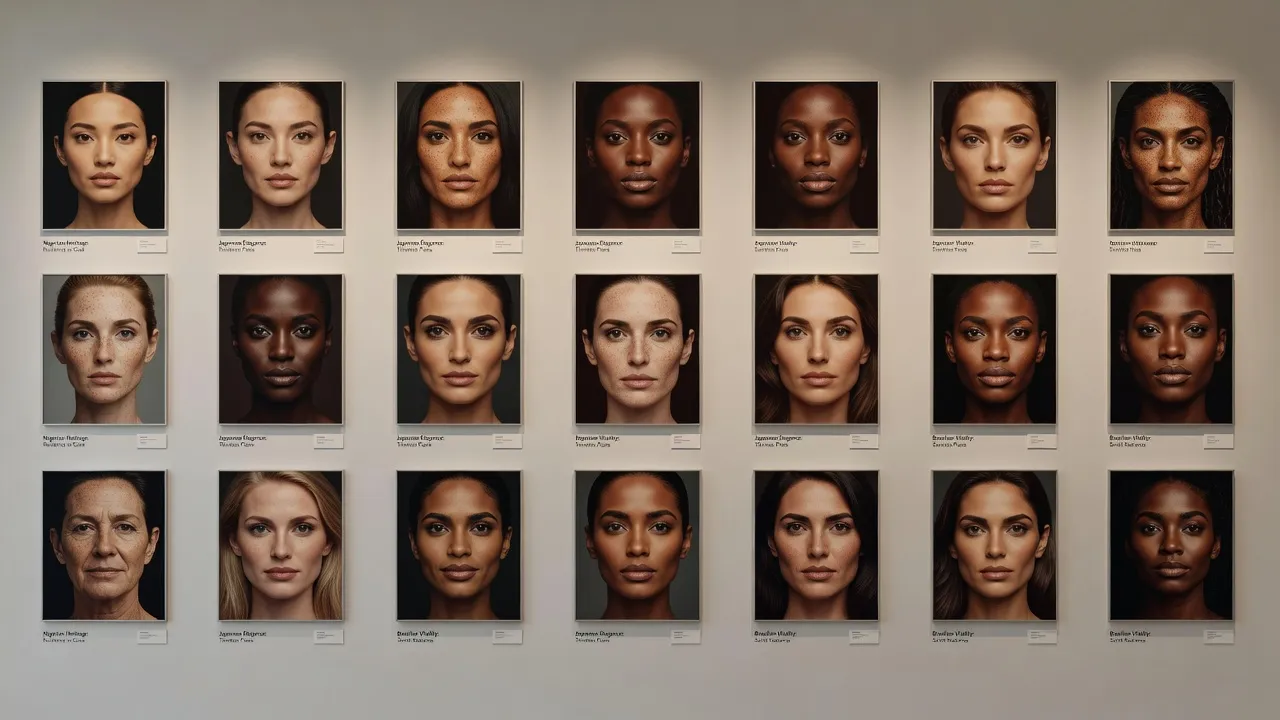
Several factors cause your rating to swing significantly across different evaluation methods:
- Cultural reference points: Features valued in modern Western aesthetics, such as prominent cheekbones, contrast with different cultural norms like those found in korean standards of beauty.
- Photo quality artifacts: Low-resolution images introduce digital noise that automated skin-texture analyzers misinterpret as blemishes.
- Focal length distortion: Wide-angle smartphone front cameras distort facial proportions, making your center face appear larger relative to your ears and jaw.
- Demographic bias in training sets: AI systems inherently reflect the demographic composition and preferences of the people who created and rated their training data.
How to get actionable value from a beauty rating without taking it personally
Treating a beauty rating as an operational baseline for style adjustments—rather than a judgment of personal worth—is the healthiest way to use these tools. A single number tells you very little about your charm or overall appeal, but systematic feedback can highlight clear, actionable opportunities for self-improvement.
To get the most utility out of an automated rating or facial analysis tool, apply these practical steps:
Standardize your input photos
Take test photos under consistent, indirect natural sunlight using a neutral back wall. Avoid wide-angle selfies held close to your face. Instead, place your phone at eye level roughly four feet away, using a timer or back camera to prevent focal lens distortion.
Focus on adaptable features
Ignore unchangeable structural scores and look for areas you can actively improve through daily habits. If an AI analysis highlights uneven skin tone, dark under-eye circles, or lack of hairstyle framing, address those specific elements:
- Adjust your sleep and hydration habits to minimize facial puffiness.
- Adopt targeted skincare routines to enhance natural skin radiance.
- Select hairstyles designed to complement your specific facial structure.
Use specialized tools built for improvement
Instead of using vague rating tools that leave you guessing, pick apps designed to guide your aesthetic journey. The Glow Up & Attractiveness Test provides both a personalized face rating score and detailed facial analysis to give you immediate direction. By connecting your AI ratings to a actionable glow-up guide and realistic preview tools, you learn exactly which hair, makeup, and skin adjustments offer the highest return on effort.
Frequently Asked Questions
What is a beauty rating?
A beauty rating is a numerical or categorical score that measures facial attractiveness based on geometric symmetry, proportions, skin texture, or human consensus voting.
Are AI face rating apps accurate?
AI face rating apps measure geometry and skin clarity accurately against their training data, but they cannot measure charm, charisma, or personal attraction in real life.
How does the Golden Ratio apply to face ratings?
The Golden Ratio calculates mathematical proportions between facial landmarks, comparing features like eye spacing and nose length against the ratio of 1 to 1.618.
Why do I get different beauty ratings on different apps?
Ratings vary because each app uses different algorithms, distinct training datasets, unique photographic focal lengths, or different human voter demographics.
Can changing camera distance alter my face rating score?
Yes, holding a camera close causes lens distortion that artificially expands the nose and narrows the head, significantly altering automated geometry scores.
What was the main lesson from the Beauty.AI controversy?
The controversy proved that AI beauty algorithms reflect the racial and demographic biases present in their training datasets, requiring more diverse data for fair scoring.
Is Photofeeler better than AI beauty rating apps?
Photofeeler measures real human perception in specific social contexts, while AI apps provide instant objective evaluations of facial geometry and skin quality.