
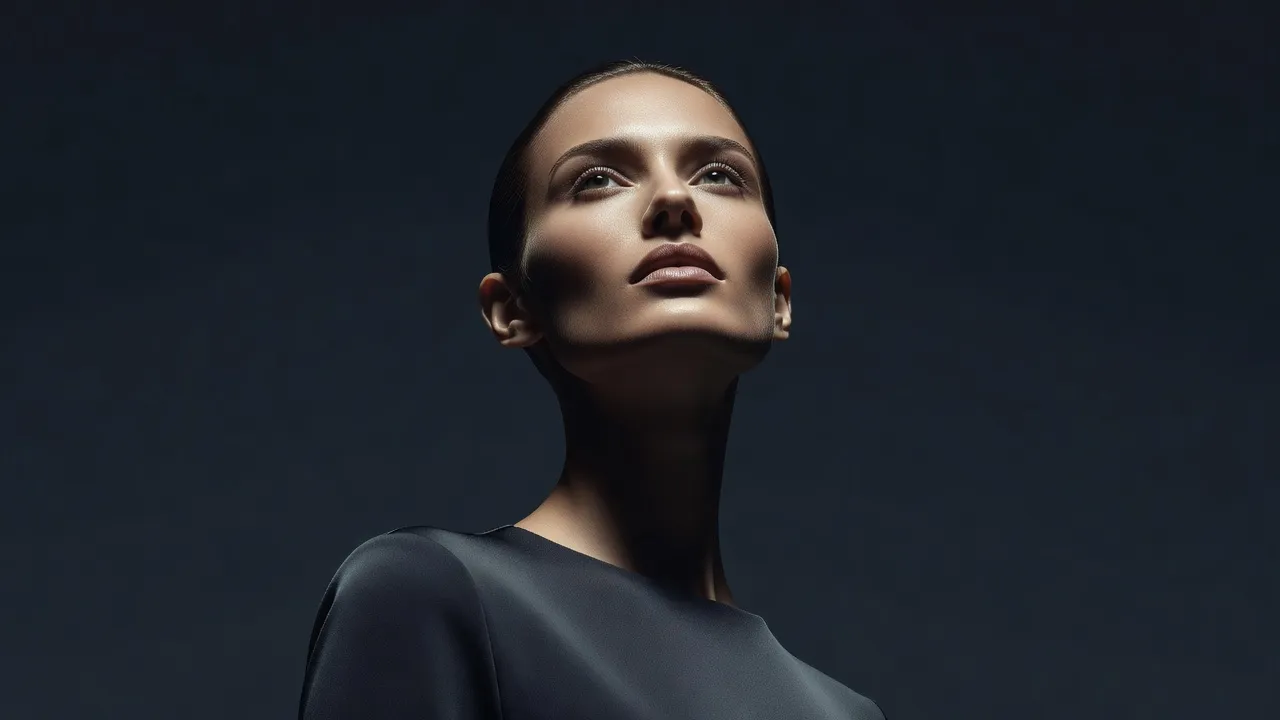
A face looking up position refers to an upward pitch angle where the head tilts upward relative to the camera lens or viewer line, visually expanding the jawline while compressing the forehead and upper facial third. This optical shift exposes the neck line, increases nostril visibility, and alters traditional facial proportions through depth foreshortening. While older photo advice treated upward angles as simple optical errors, modern 2026 facial analysis models treat pitch adjustments as a standard variable in digital image processing.
Let us break down why this specific perspective changes your facial structure on camera and how modern optical models handle upward angles.
What happens to facial proportions when a face is looking up?
When your face tilts upward relative to a camera lens, perspective projection magnifies features closer to the glass and shrinks features farther away. The chin and lower jaw sit closest to the lens, making them appear significantly wider and longer. Meanwhile, the forehead and hairline recede into the distance, reducing their vertical height on a 2D screen.
This tilt alters the standard facial third ratios that artists and facial analysts measure:
- Lower Third Expansion: The chin, jawline, and under-jaw area occupy a larger percentage of the frame.
- Middle Third Foreshortening: The distance between the tip of the nose and the brow line compresses visually.
- Upper Third Reduction: The forehead appears smaller as it slopes away from the camera plane.
- Nostril Exposure: The base of the nose flips forward, making nostril symmetry far more prominent.
In my view, people often misinterpret these optical shifts as permanent structural changes in their appearance. If you want to see how your facial geometry holds up across different angles, uploading a photo to the Glow Up & Attractiveness Test app gives you a detailed face analysis using a fine-tuned AI model that normalizes pitch distortions.

How does smartphone focal length alter an upward face angle?
Smartphone camera lenses use wide focal lengths that aggressively stretch features close to the camera, compounding the effects of an upward head tilt. Most standard mobile front-facing cameras sit between an 18mm and 24mm equivalent focal length.
According to detailed optics documentation on perspective distortion in photography, close distances magnify foreshortening exponentially relative to longer portrait lenses. As explained in educational guides from Cambridge in Colour, lens focal length fundamentally alters spatial depth perception across facial planes.
Here is what changes depending on lens physical distance:
- Wide-Angle Proximity (Under 1.5 feet): The jaw expands dramatically, the nose base appears disproportionately large, and ears vanish behind the cheeks.
- Medium Distance (3 to 5 feet): The lower jaw retains natural symmetry while maintaining a defined neck-to-chin line.
- Telephoto Lens (85mm equivalent at 8+ feet): Foreshortening flattens out, preserving true 3D facial proportions even with a steep upward tilt.
If you are studying your facial geometry, understand that wide-angle camera distortion causes up to 30 percent volumetric expansion on near-field objects. Understanding your true facial structure requires separating lens optical artifacts from physical bone alignment.
Comparing facial camera angles: High, flat, and low pitch
Choosing a camera elevation shifts which facial features dominate the frame and how shadows outline your jawline. Different pitch angles solve different visual objectives depending on lighting conditions and facial width.
| Camera Pitch Angle | Visual Effect on Jawline | Nostril Exposure | Forehead Ratio | Best Use Case |
|---|---|---|---|---|
| Low Angle (Face Looking Up) | Maximum jaw definition and chin projection | High visibility | Compressed / Minimized | Highlighting strong jawlines and neck structure |
| Eye-Level (Flat Zero Pitch) | Natural 1:1 structural representation | Balanced / Neutral | True-to-life proportion | Standard ID photos and metric facial symmetry |
| High Angle (Face Looking Down) | Tapered, slimmer jaw line | Zero to minimal | Expanded / Emphasized | Softening heavy jawlines and emphasizing eye size |
(Table note: Perspective geometry varies based on subject-to-lens physical distance.)
When evaluating your overall aesthetic balance, trying a specialized tool like the Glow Up & Attractiveness Test iOS app lets you snap a selfie for a personalized face rating score that calculates structural harmony regardless of camera tilt.
How do modern facial analysis AI models read upward tilt?
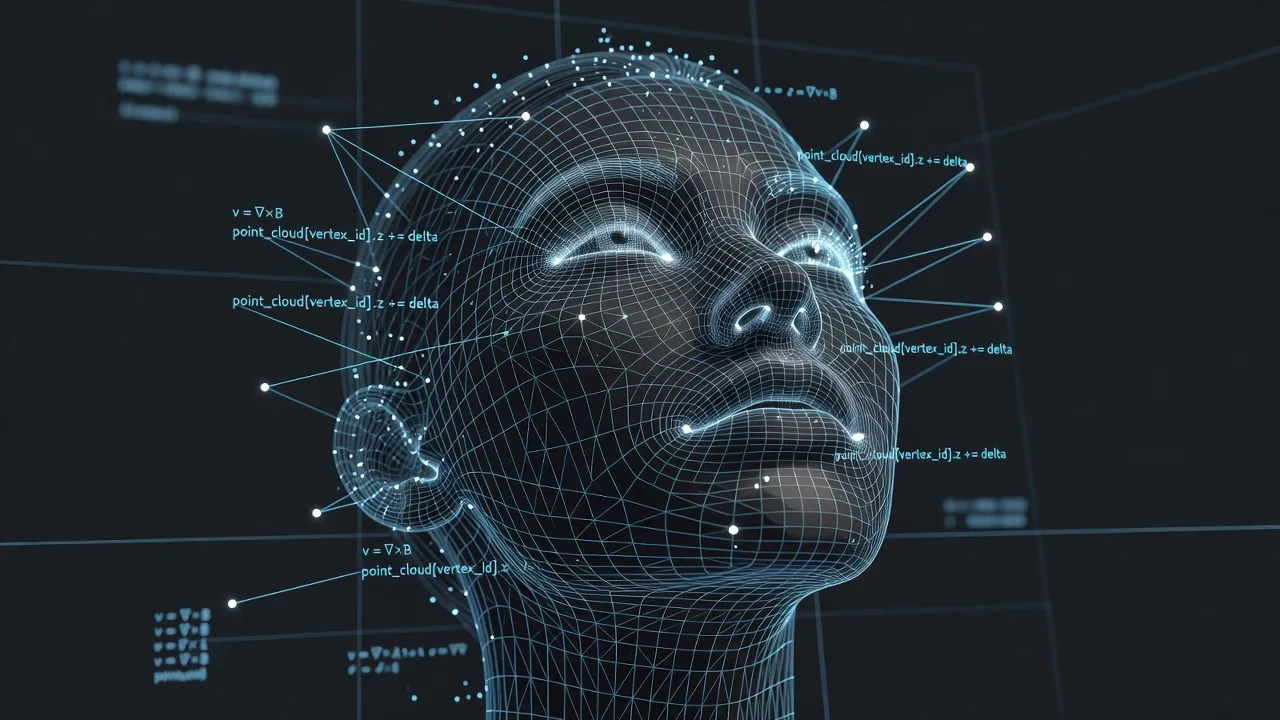
Modern artificial intelligence uses 3D head pose estimation to map facial landmarks across pitch, yaw, and roll axes before calculating symmetry. Older facial software from the early 2020s relied on flat 2D grid coordinates, meaning an upward tilt completely broke the algorithm.
As documented in computer vision algorithms detailed in OpenCV pose estimation, state-of-the-art vision models map spatial points across a dynamic 3D facial mesh.
When an AI encounters a face looking up, it executes three normalization steps:
- Landmark Pitch Vectoring: The model identifies tilt rotation on the X-axis by measuring eye-to-chin spatial depth.
- Canonical Mesh Projection: The algorithm mathematically rotates the 3D landmark point cloud back to a neutral 0-degree angle.
- Metric Calculation: Symmetry, cheekbone depth, and facial ratios are evaluated on the normalized 3D mesh rather than the raw 2D pixel grid.
This technological shift is major. As of September 2026, modern face rating apps no longer require you to stand like a mugshot subject against a blank wall. For a deeper breakdown on how AI interprets human geometry, read our full guide on analysis of face guide.
Why does a face looking up change shadows and jawline definition?
Looking up changes the surface angle of your jaw relative to overhead light sources, eliminating under-chin shadow cast and sharpening the jawline contour. Standard overhead room lighting creates a dark shadow beneath the mandible when head position is horizontal.
When you tilt your chin up toward the ceiling:
- Shadow Recess: Overhead light travels directly onto the submental (under-chin) area, eliminating double-chin shadows caused by skin fold compression.
- Sternocleidomastoid Tension: Neck muscles stretch taut, flattening loose neck tissue against the cervical spine.
- Jawline Separation: The physical margin between the lower jawbone and the neck flexes, creating a clean visual edge.
Many people use an upward head tilt specifically to mask submental fullness or highlight chin projection. However, over-tilting can expose the underside of the septum and create unflattering optical distortions.
If you want to understand how neck positioning impacts your overall side and front aesthetics, explore our detailed overview on face side profile dynamics.
What are the biggest mistakes when capturing a face looking up?
The most frequent mistake when photographing a face looking up is combining close camera distance with steep upward angles. This creates severe optical distortion commonly called the low camera effect.
Here are four critical mistakes to avoid:
- Holding the Phone Below Chest Level: Shooting straight up from a low handheld angle expands nostrils and distorts neck width.
- Ignoring Light Source Elevation: If light comes from directly above, an upward chin tilt casts harsh nose shadows upward across the eye sockets.
- Forcing Neck Strain: Over-extending the neck creates unnatural muscular tension cords along the throat.
- Using Ultra-Wide Lenses Up Close: Using 0.5x or standard 1x front lenses within arm's reach inflates chin size out of realistic proportion.
To correct these errors, move the camera back at least three feet, use a minor 5-to-10 degree chin lift rather than a dramatic 45-degree tilt, and ensure your primary light source sits in front of your face rather than directly overhead.
How to optimize your photo angles for natural facial symmetry
Achieving a natural look requires balancing subtle head tilts with correct lens elevation and focal length. You do not need extreme poses to highlight your best features.
Follow these structured guidelines:
- Elevate the Camera Lens: Position the camera at eye level or slightly above, then tilt your chin up 5 degrees. This creates jawline separation without exposing nostrils.
- Step Back and Zoom: Move the phone further away and use a 2x or 3x telephoto optical setting to flatten wide-angle distortion.
- Follow the Glow Up System: If you want clear feedback on which angles accentuate your natural bone structure, using Glow Up & Attractiveness Test provides tailored tips to beautify your look based on real structural analysis.
Understanding how small adjustments in head pitch change your visual ratios gives you total control over how you present on camera.
Frequently Asked Questions
Is a face looking up angle flattering for portrait photos?
A slight upward tilt of 5 to 10 degrees can be flattering because it tightens neck tissue and highlights the jawline. However, steep upward angles taken close to the lens expose nostrils and distort facial proportions.
Why does my jaw look huge when I look up at the camera?
Your jaw looks larger due to camera foreshortening. Objects closer to a wide-angle lens appear disproportionately large compared to features that sit further back, like your eyes and forehead.
Can AI face scanners evaluate photos where my face is looking up?
Yes, modern AI facial analysis tools use 3D pose estimation to calculate head pitch and normalize geometric landmarks back to a zero-degree baseline before scoring facial harmony.
How do I prevent a double chin when looking up?
Tilting the chin upward naturally stretches the neck skin, but combining a minor chin lift with proper camera elevation (eye level or slightly above) provides optimal jawline separation without distorting your face.
What is the ideal camera distance for a face looking up shot?
The ideal distance is at least 3 to 5 feet away from the lens. Using a telephoto lens or 2x zoom setting at this distance prevents wide-angle facial skewing.
Does looking up change how facial symmetry is measured?
In raw 2D photographs, looking up skews symmetry by changing the vertical distances between eyebrows, nose base, and chin. 3D algorithmic systems correct for this tilt mathematically.
What lens focal length is best for face photos?
Focal lengths between 85mm and 105mm offer the most accurate facial representation with minimal edge or depth distortion.