

Facial dimples are small natural indentations in the skin caused by variations in underlying facial muscles or subcutaneous tissue structure. While most commonly found on the cheeks, these indentations occur in four primary anatomical locations: cheeks (fovea buccalis), chin (fovea mentalis), lower back (fovea lumbales lateral), and the upper cheek or malar region.
If you are curious about how your unique facial structure, dimples, and feature proportions come together, trying an automated analysis of face through the Glow Up & Attractiveness Test can give you a quick baseline. The app uses an AI model fine-tuned for women to evaluate facial harmony and offer tailored aesthetic recommendations.
Understanding how dimples form requires looking beneath the skin at muscular variations, genetics, and facial tissue mechanics.
What role does the zygomaticus major muscle play in dimple formation?
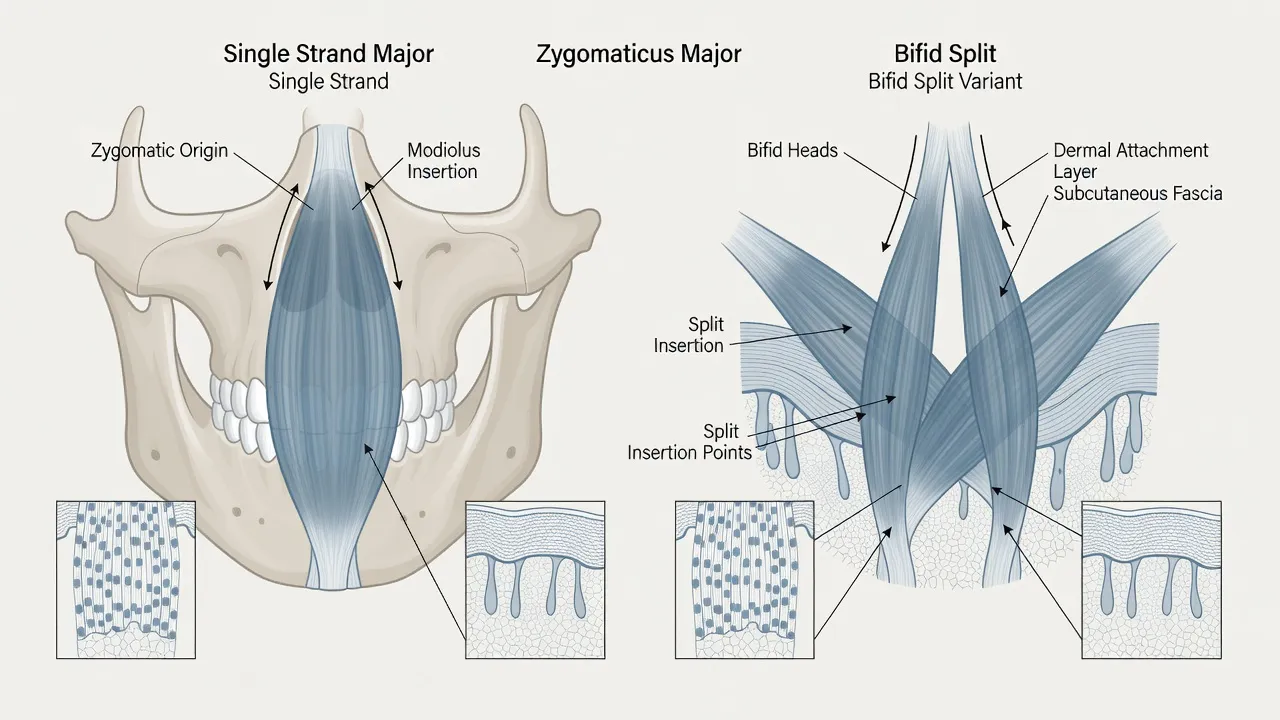
The zygomaticus major muscle creates cheek dimples when it possesses a double or split (bifid) structure that anchors to the overlying dermal tissue. In standard anatomy, this muscle originates at the cheekbone and travels down as a single band to insert into the corner of the mouth, elevating the lips when you smile.
According to anatomical research published on NCBI, people with cheek dimples frequently inherit a bifid zygomaticus major muscle. The muscle divides into an superior (upper) bundle and an inferior (lower) bundle near the cheek area. The inferior strand attaches firmly to the deep layer of the dermal skin.
When you express joy or smile, the muscle contracts and pulls the skin inward. This mechanical tethering creates the classic cheek pit (fovea buccalis) that appears during movement and disappears when your face rests.
What is the difference between true dimples and false dimples?
True dimples are permanent anatomical variations caused by structural muscle anomalies or dermal attachments, whereas false dimples are temporary depressions caused by fat distribution or skin laxity.
The table below outlines how these two categories differ across origin, permanence, and visual presentation.
| Feature / Trait | True Dimples | False Dimples |
|---|---|---|
| Primary Cause | Bifid zygomaticus muscle or mentalis bone fissure | Localized subcutaneous fat loss or skin folds |
| Visibility at Rest | Usually invisible until facial expression occurs | Often visible without smiling or moving |
| Genetic Link | Strongly tied to autosomal dominant genetic traits | Dependent on weight changes, body fat, or aging |
| Permanence | Remains consistent throughout adult life | Can disappear after weight loss or cosmetic changes |
| Anatomical Depth | Deep tethering to facial dermis or bone | Superficial indentation in fat tissue layer |
True dimples are genetic traits that remain stable throughout adulthood. False dimples often show up when body fat decreases or when aging alters skin elasticity. If you notice temporary indentations after intense dieting, those are typically fat-related depressions rather than true structural dimples.
What is a malar dimple?
A malar dimple is a specific facial indentation located high on the cheekbone (malar region) above the typical mid-cheek position. Unlike standard cheek dimples that sit along the smile line near the corners of the mouth, malar dimples sit over the upper zygomatic bone.
As detailed on Wikipedia, these indentations occur less frequently than classic cheek dimples. They stem from tight tethering between the skin and the upper facial fascia near the orbicularis oculi muscle.
Malar dimples are often subtle and tend to highlight prominent cheekbones when light hits the upper face. Because they sit high on the cheek, they remain slightly visible even when your face is completely still.
What is a para-angle dimple (upper and lower para-angle) classification?
Para-angle dimples are classified based on their direct proximity to the corner of the mouth (the oral commissure), dividing into upper para-angle and lower para-angle variations.
Plastic surgeons and anatomists use this classification to map precise locations across the lower mid-face:
- Upper Para-Angle Dimples: These sit slightly above the horizontal line drawn from the corner of the mouth. They activate during wide smiles and involve the upper strands of the facial muscle network.
- Lower Para-Angle Dimples: These sit below the mouth corner line, near the lower jaw contour. They often appear as slight, soft divots when talking or laughing.
Identifying your dimple placement helps clarify how your facial muscle movement impacts your overall side profile and symmetry.
What is the difference between a chin dimple and a cleft chin?
There is no structural difference between a chin dimple and a cleft chin; both terms describe the same Y-shaped fissure in the underlying mandible bone and mentalis muscle.
The distinction in everyday conversation is purely aesthetic. A shallow or small depression is usually called a chin dimple, while a deeper vertical groove is termed a cleft chin.
Anatomically, this indentation forms during fetal development when the left and right halves of the jawbone (mandible) do not fully fuse together. The overlying mentalis muscle splits across this bony gap, leaving a permanent groove in the skin. Unlike cheek dimples, chin dimples remain visible whether your face is moving or resting.
What is dimpleplasty?
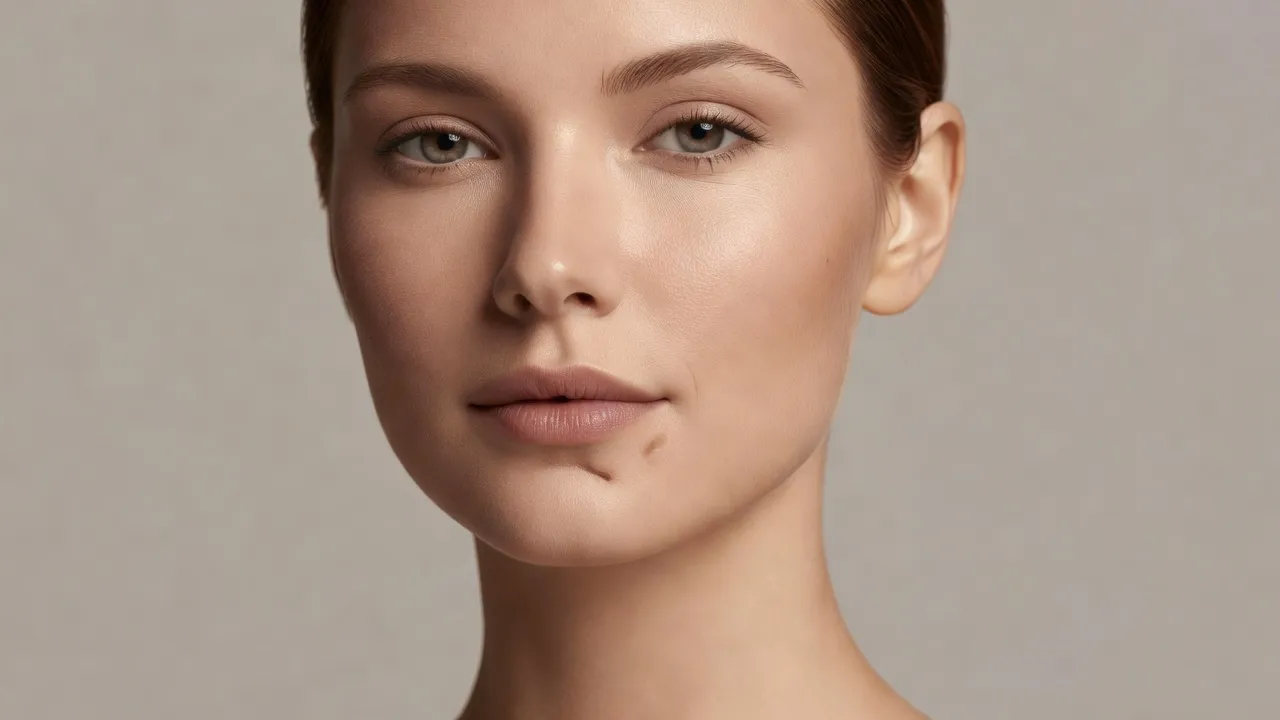
Dimpleplasty is an outpatient cosmetic surgical procedure that creates artificial cheek or chin dimples by passing a suture through the inner cheek to bind the skin directly to the underlying muscle.
The procedure takes about 20 to 30 minutes under local anesthesia. According to guidelines from the American Society of Plastic Surgeons, the surgeon cuts a small hole inside the mouth tissue, removing a tiny piece of fat and muscle. A punch biopsy tool or absorbable suture then connects the cheek skin to the buccinator muscle layer beneath.
Costs for dimpleplasty typically range between $1,500 and $3,500 depending on location and surgeon expertise. While healing takes 1 to 2 weeks, artificial dimples remain visible 24/7 for the first few months until the internal suture dissolves and leaves behind natural scar tissue.
Anatomical comparison of facial dimple types
Understanding the full landscape of facial indentations helps clarify how different muscle groups create unique expressions. The comparison table below highlights the four primary natural dimple variations.
| Dimple Type | Anatomical Region | Underlying Structure | Primary Expression Trigger |
|---|---|---|---|
| Classic Cheek | Mid-cheek (fovea buccalis) | Bifid zygomaticus major muscle | Smiling, laughing |
| Malar | Upper cheekbone | Upper zygomatic fascia | Squinting, smiling |
| Para-Angle | Mouth corners | Risorius or modiolus tissue | Speaking, smirking |
| Chin / Cleft | Lower jaw (fovea mentalis) | Unfused mandible bone / mentalis muscle | Static (always visible) |
While each type offers a distinct look, they all stem from slight structural shifts in your skeletal or muscular foundation.
Can facial exercises or fat loss create natural dimples?
Facial exercises cannot create true dimples because they cannot force a single muscle band to split into a bifid structure.
Many online tutorials promise that sucking in your cheeks or pressing hard with a pencil will yield permanent indentations. In reality, these efforts only cause temporary skin bruising or mild swelling. True dimples require a physical attachment between the skin and deep muscle fibers.
However, losing excess body fat can occasionally reveal hidden dimples that were previously masked by thick subcutaneous fat tissue layers. If you already possess a split zygomaticus muscle, slimming down may make that structural dimple more visible. Trying targeted routines like face exercises for symmetry can help tone facial muscle structure, but it will not alter your baseline anatomy.
How genetic inheritance determines dimple presence
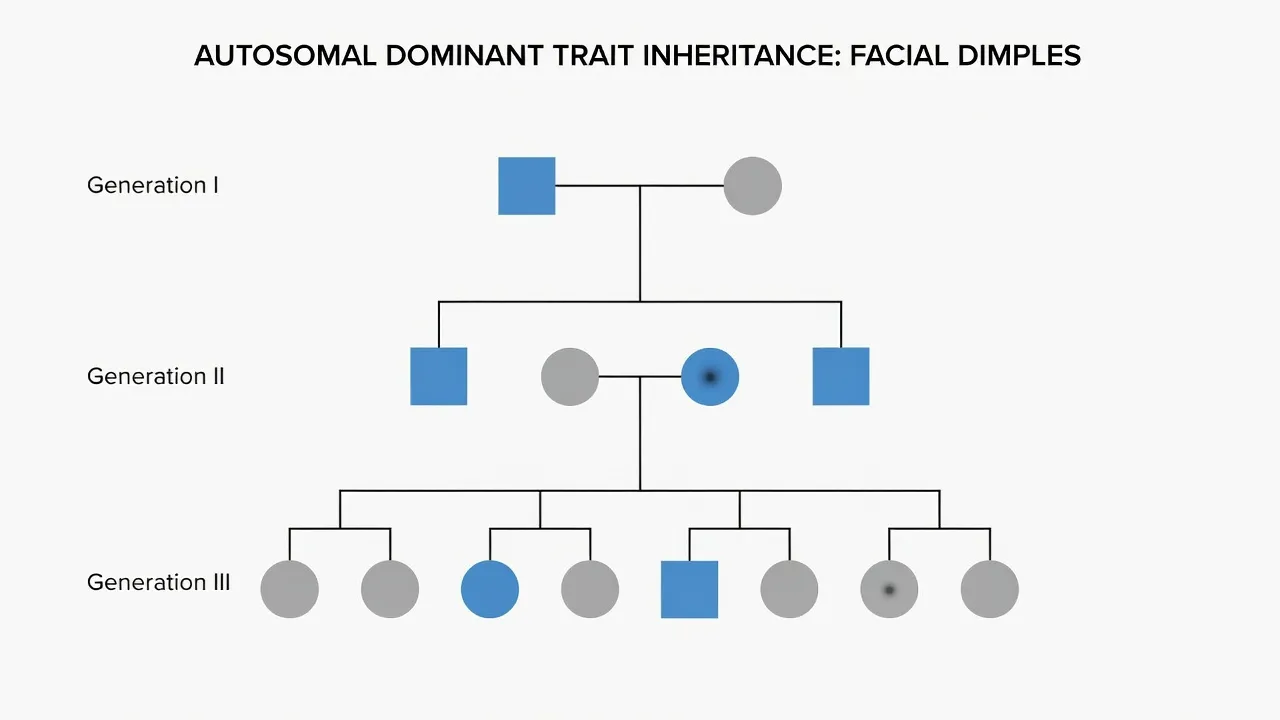
Facial dimples are widely considered an autosomal dominant trait, meaning you only need to inherit the gene mutation from one parent to display them.
If one of your parents has classic cheek dimples, you have roughly a 50% chance of inheriting the underlying muscle split. If both parents carry the trait, your odds jump closer to 75%.
However, geneticists sometimes classify dimples as an irregular dominant trait. This means the feature can occasionally skip a generation if the gene expression is weak or masked by facial fat structure.
Analyzing your facial proportions and unique features
Every facial feature, from a high malar dimple to a sharp chin cleft, contributes to your overall visual harmony. Learning how these traits interact can help you highlight your best angles.
Using the Glow Up & Attractiveness Test app allows you to snap a simple selfie and receive a comprehensive beauty score breakdown. The tool measures your symmetry, highlights feature dynamics, and provides a customized glow up guide to refine your aesthetic style.
Whether you want to showcase your natural dimples or balance out your jawline structure, automated AI tools make tracking your progress straightforward and objective.
Frequently Asked Questions
What is the rarest type of facial dimple?
Malar dimples are the rarest natural facial dimples. They sit high on the cheekbone rather than near the smile line and require specific tethering of the upper facial fascia.
Do cheek dimples disappear as you get older?
Yes, cheek dimples can fade over time as facial fat melts and skin loses its natural elasticity. When skin thins out, the muscle tethering effect becomes less pronounced.
Is a dimple considered a facial birth defect?
Technically, anatomists classify cheek dimples as a harmless genetic anomaly or birth defect caused by split muscle strands. However, socially, they are universally viewed as attractive traits.
Can you have a dimple on only one side of your face?
Yes, unilateral (single-sided) dimples are common. Genetic muscle variations frequently manifest on just one side of the face due to slight developmental differences.
Are dimpleplasty results permanent?
Dimpleplasty results are generally permanent once the internal scar tissue forms. However, if the internal suture tears during early healing, the artificial dimple may unravel and vanish.
Why do some dimples only show up when a person smiles?
Dynamic dimples only appear during a smile because muscle contraction is required to pull the attached dermal tissue inward. At rest, the muscle is relaxed and the skin remains flat.
Do chin dimples change shape over time?
Chin dimples usually remain stable because they are rooted in underlying jawbone structure. Significant weight gain or surgical intervention are the only factors that change their appearance.