
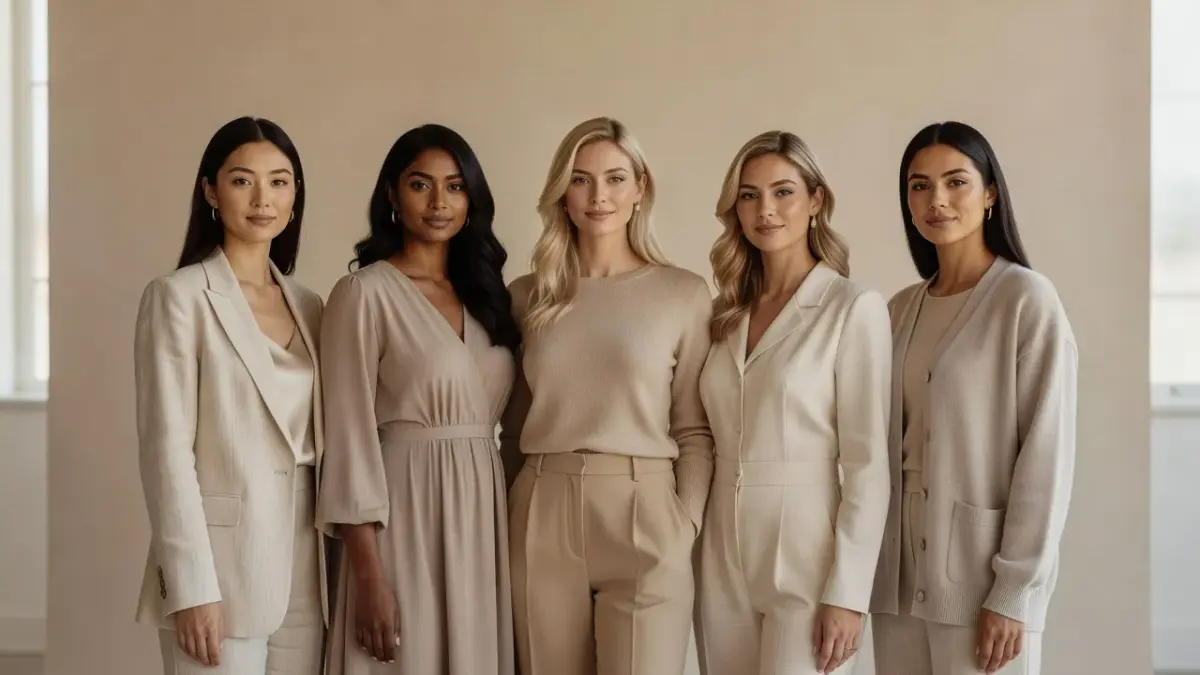

Western standards of beauty are the looks that US and European media reward most: a slim but curvy body, clear skin, symmetrical features, full lips, and youth. The preferred body shape swings every 10 to 20 years, but youth, symmetry, and Eurocentric facial features have barely moved since the 1950s.
Knowing the standard doesn't tell you how your own face reads against it. I'd start with Glow Up & Attractiveness Test (the only looksmaxxing app built for women), which gives your selfie a detailed face analysis and tailored tips for the features the current ideal rewards on you.
What features define Western beauty standards in 2026?
In 2026 the Western ideal is a toned, low-body-fat frame, poreless "glass" skin, a defined jawline and cheekbones, full lips, and a face that looks about 25 whatever your real age. I've followed this topic for years, and the face checklist is the part that changes least. The body checklist swings around.
The recurring features, as of November 2026:
- Face: High cheekbones, a narrow straight nose, almond eyes, full lips, and a sharp jaw. These are the same traits measured in most face symmetry and proportion research.
- Skin: Even tone, no visible texture, a "lit from within" finish. Tanned skin is still prized on white women. Lighter skin is still privileged on women of color.
- Body: Thin again at the top of fashion, with a softer hourglass in pop culture. More on that split below.
- Age: No visible lines. Preventive Botox in the twenties is now normal small talk.
How have Western beauty standards changed in recent years?
The biggest change since 2022 is the swing back toward thinness, driven largely by GLP-1 weight-loss drugs, after a decade dominated by the curvy Kardashian look. The semaglutide brand Wegovy got FDA approval for weight management in June 2021. By 2023 "Ozempic face" was a mainstream phrase.
Three other shifts I'd point to:
- "Clean girl" replaced full glam. Heavy contour and cut-crease looks from the 2016 Instagram era gave way to slicked buns, brushed-up brows, and skin that looks bare (but usually isn't).
- Buttock augmentation cooled off. The Brazilian butt lift carries a well-documented risk of fat embolism. Wikipedia's entry on buttock augmentation covers why surgical societies issued safety warnings about it.
- "Natural" got more expensive. The 2026 version of natural relies on filler, lasers, and tretinoin. The American Society of Plastic Surgeons publishes yearly procedure statistics, and neuromodulator injections like Botox have topped the minimally invasive list for years.
For the longer arc, I keep a separate rundown of how beauty ideals evolved across centuries.
How have the thin ideal, curvy ideal, and hourglass body trends shifted?
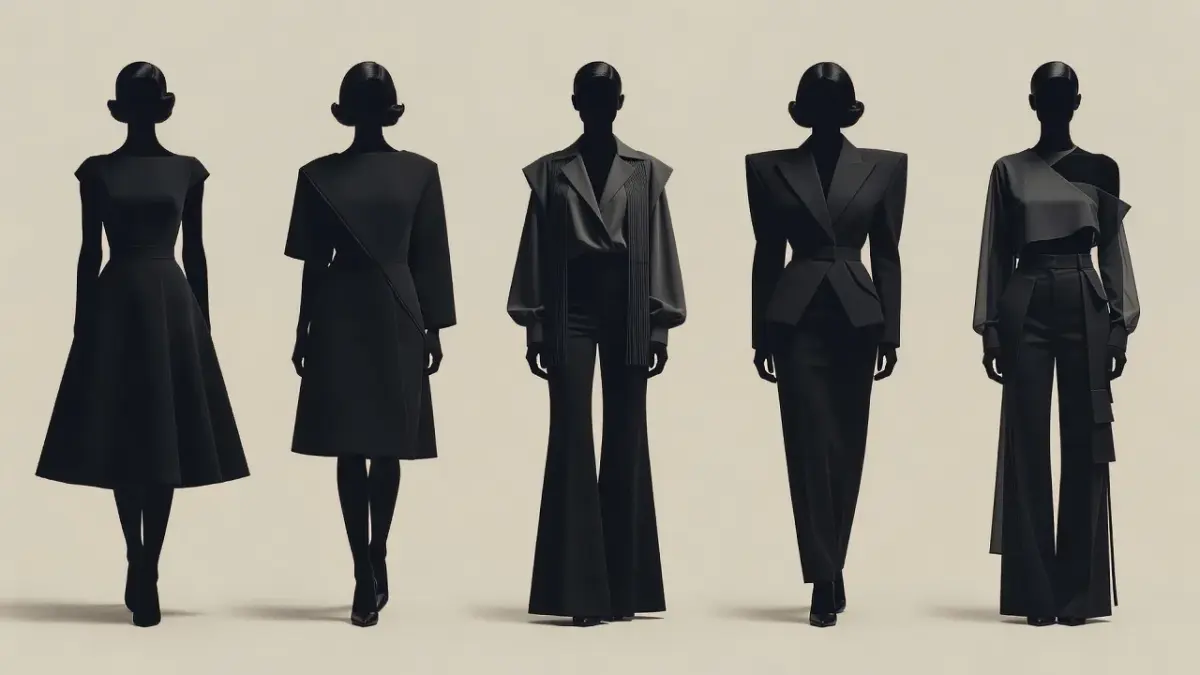
Western body ideals have cycled between curvy and thin roughly every 10 to 20 years since the 1950s. Each swing follows whatever body was hardest to get at the time. Marilyn Monroe's hourglass gave way to Twiggy, then to 1980s fitness bodies, then to 1990s waif looks.
| Era | Dominant body ideal | Face and style signature | Main driver |
|---|---|---|---|
| 1950s | Hourglass (Marilyn Monroe) | Red lip, winged liner, set curls | Hollywood studios |
| 1960s | Thin, boyish (Twiggy) | Huge lashes, pale lips | London youth fashion |
| 1980s | Athletic and toned (Jane Fonda era) | Bold brows, big hair | Aerobics videos, supermodels |
| 1990s | Very thin ("heroin chic," Kate Moss) | Matte skin, brown lip | Calvin Klein ads, runway |
| 2010s | "Slim-thick": small waist, large hips | Contour, overlined lips | Instagram, the Kardashians |
| 2020s | Thin again, toned, softer curves in pop culture | "Clean girl," glass skin | GLP-1 drugs, TikTok |
The 1990s row is the one people now compare to today. The heroin chic look drew criticism from the Clinton White House in 1997, and the comparison keeps coming up because thin is back at the top of fashion.
The hourglass never fully leaves. It just shrinks: a 2026 hourglass is narrower everywhere than a 2016 one.
Is the curvy ideal over?
No, the curvy ideal isn't over. It has split by audience. Runway and luxury fashion moved back to thin. Music, fitness, and much of TikTok still celebrate hips and glutes, just on a leaner frame than in 2018.
Does waist-to-hip ratio define the ideal body shape and attractiveness?
Waist-to-hip ratio predicts attractiveness ratings better than weight alone, but it doesn't define the ideal on its own. The ratio most often linked to female attractiveness is about 0.7, a waist 70% the size of the hips. Wikipedia's waist-hip ratio entry traces that figure to psychologist Devendra Singh's work from the 1990s.
The 0.7 number has limits:
- It isn't universal. Some studies of non-Western, food-scarce populations found preferences for higher ratios and heavier bodies.
- It ignores everything else. Twiggy and Marilyn Monroe both came close to 0.7. Overall size, muscle, and posture changed how each was judged.
- It's often mis-measured. Hip measurement is taken at the widest point of the buttocks, and most people at home measure too high.
I'd treat 0.7 as a pattern researchers keep finding, not a target. You can't change your skeletal hip width, and a number you can't change shouldn't become a goal.
How do Instagram and TikTok influence Western beauty standards?
Instagram and TikTok speed up beauty trends from years to months and push everyone toward one filtered face. In 2019 Jia Tolentino described this in The New Yorker's essay "The Age of Instagram Face": a single, cyborg-like look with poreless skin, high cheekbones, cat eyes, and full lips, often racially ambiguous.
Filters normalized surgery-level changes. TikTok's "Bold Glamour" filter went viral in early 2023 because it tracked faces so well that people couldn't tell it was on. That's the real problem: you stop comparing yourself to people and start comparing yourself to software.
The platforms have pulled back a little. Meta shut down its Spark AR platform for third-party Instagram filters in January 2025. TikTok announced limits on some appearance-altering effects for users under 18 in late 2024. Neither move ended filtered faces, since creators edit in outside apps anyway.
Trend cycles got shorter. "Clean girl," "latte makeup," and "mob wife" all peaked and faded within about 18 months on TikTok. So the ideal feels both fixed (same face) and impossible to keep up with (new styling every season).
How has the body positivity movement affected beauty standards?
The body positivity movement widened who appears in Western advertising, but it didn't change which bodies get rewarded most. The body positivity movement grew out of the fat acceptance movement, which started with the founding of NAAFA in 1969. It went mainstream on Instagram in the 2010s.
What it did achieve:
- Unretouched campaigns. Dove's Campaign for Real Beauty launched in 2004. Aerie stopped retouching its models in 2014.
- Extended sizing. Many mainstream US retailers added plus ranges in the late 2010s.
- Vocabulary. "Body neutrality," the idea that you don't have to love your body, just stop obsessing over it, became the gentler follow-up.
What it didn't do is stop the thin swing. The GLP-1 era has had a hard time keeping its message alive, and several plus-size influencers have publicly lost weight on these drugs since 2023. I think the movement's lasting win is cultural permission to opt out, not a new ideal.
How do Eurocentric and racialized beauty standards shape Western ideals?
Western beauty standards still center European features: lighter skin, narrow noses, straight or loosely wavy hair, and light eyes. Features from other ethnic groups get accepted mostly when they appear on white or racially ambiguous women. I go deeper on this in my piece on Eurocentric beauty standards and their history.
Where it shows up concretely:
- Hair: Natural Black hairstyles were grounds for school and job discrimination often enough that the CROWN Act, first passed in California in 2019, had to ban it. It has since been adopted by many states.
- Skin tone: Colorism favors lighter skin within communities of color, and skin-lightening creams remain big sellers worldwide.
- Borrowed features: Full lips and curvy hips, long criticized on Black women, became trendy on white celebrities in the 2010s.
What are westernized beauty standards?
Westernized beauty standards are Western ideals adopted in non-Western countries, often through surgery or cosmetics. Examples include double eyelid surgery in East Asia, nose narrowing procedures, and skin lightening across South Asia and Africa. Many regions also blend their own ideals in, which is why European countries themselves differ; I break that down in my guide to regional beauty ideals across Europe.
Why does knowing the Western standard matter for you?
Knowing the standard helps you separate what's a trend from what's actually your face. Brows, makeup, and body fat move with fashion. Bone structure, eye shape, and skin undertone don't.
When I explain this to friends, I suggest a simple split:
- List the features you can change in a month: brows, hair, skincare, makeup style.
- List the features that change slowly or not at all: jaw, nose, eye spacing.
- Spend effort only on the first list, and pick versions that suit your face rather than this season's TikTok look.
That's where a face analysis helps. Glow Up & Attractiveness Test rates a selfie, breaks down your features with its fine-tuned AI model, and gives you tailored tips for styling them, which turns step 1 into a specific list instead of guesswork. You can read more about it at startglowup.app.
Frequently Asked Questions
What is the ideal female body according to Western beauty standards?
The 2026 ideal is a lean, toned body with a small waist and moderate curves, close to a 0.7 waist-to-hip ratio. High fashion leans thinner than that, while pop culture keeps more hip and glute volume.
Are Western beauty standards unrealistic?
For most women, yes. The ideal combines low body fat, curves in specific places, and flawless skin, a mix that often depends on genetics, filters, or procedures. A filtered selfie isn't a fair benchmark for anyone.
What's the difference between Western and East Asian beauty standards?
Western standards prize tanned or golden skin on white women, defined cheekbones, and curves. East Asian standards in Korea, Japan, and China tend to prize pale skin, a small V-line face, and a slimmer, less curvy frame.
Is the hourglass figure still in style in 2026?
Yes, but in a slimmer form. The exaggerated 2010s "slim-thick" shape has faded, and the 2026 hourglass shows a defined waist on a leaner overall frame.
Do men face Western beauty standards too?
Yes. Men face a parallel ideal: height, a strong jaw, low body fat with visible muscle, and a full hairline. The "looksmaxxing" trend on TikTok and Reddit is largely built around that male checklist.
Can an app tell me if I fit Western beauty standards?
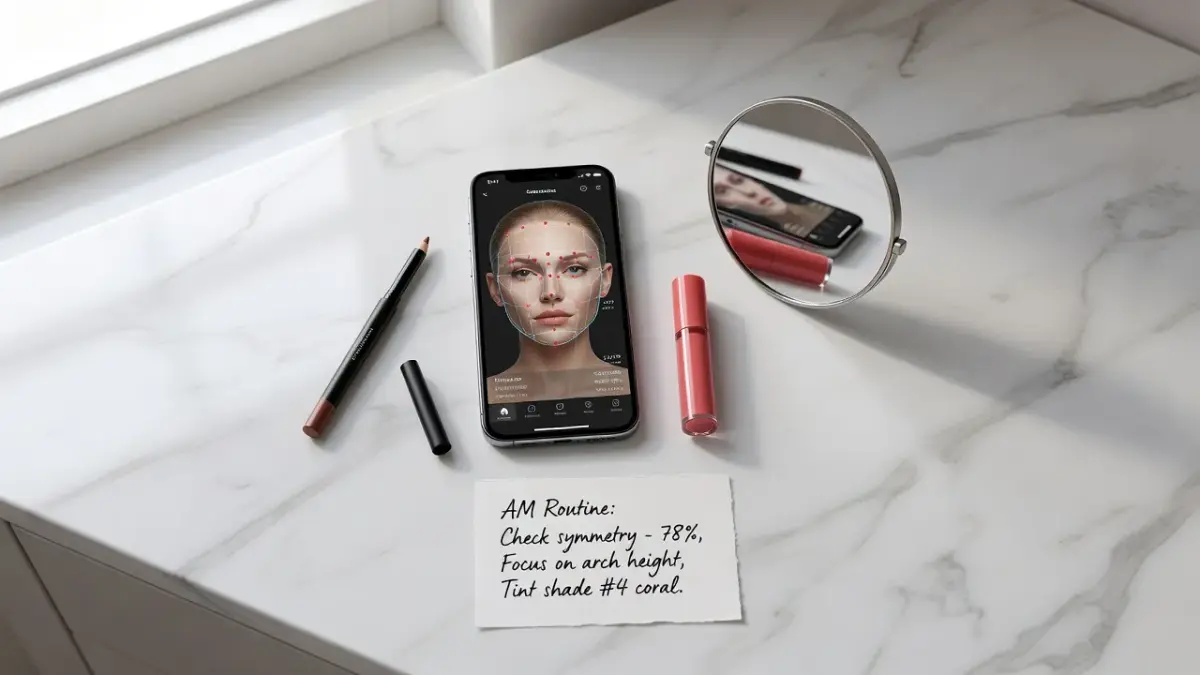
An AI face rater can score your features against the patterns it was trained on, which mostly reflect Western ideals like symmetry and proportion. Glow Up & Attractiveness Test is built for women, gives a face rating and detailed analysis from a selfie, and costs $9.99/week.
Who sets Western beauty standards?
No single group does. Fashion houses, Hollywood, advertisers, cosmetic surgeons, and since about 2012, social media algorithms all push the ideal, and the algorithms now set the pace of trend cycles.